The Weight of Facts · The truth behind the health headlines
To keep going out, discovering, taking part… and living those little moments that make life so precious.
A child reaches out their arms to you.
You want to lift them up, hold them close and share their happiness.
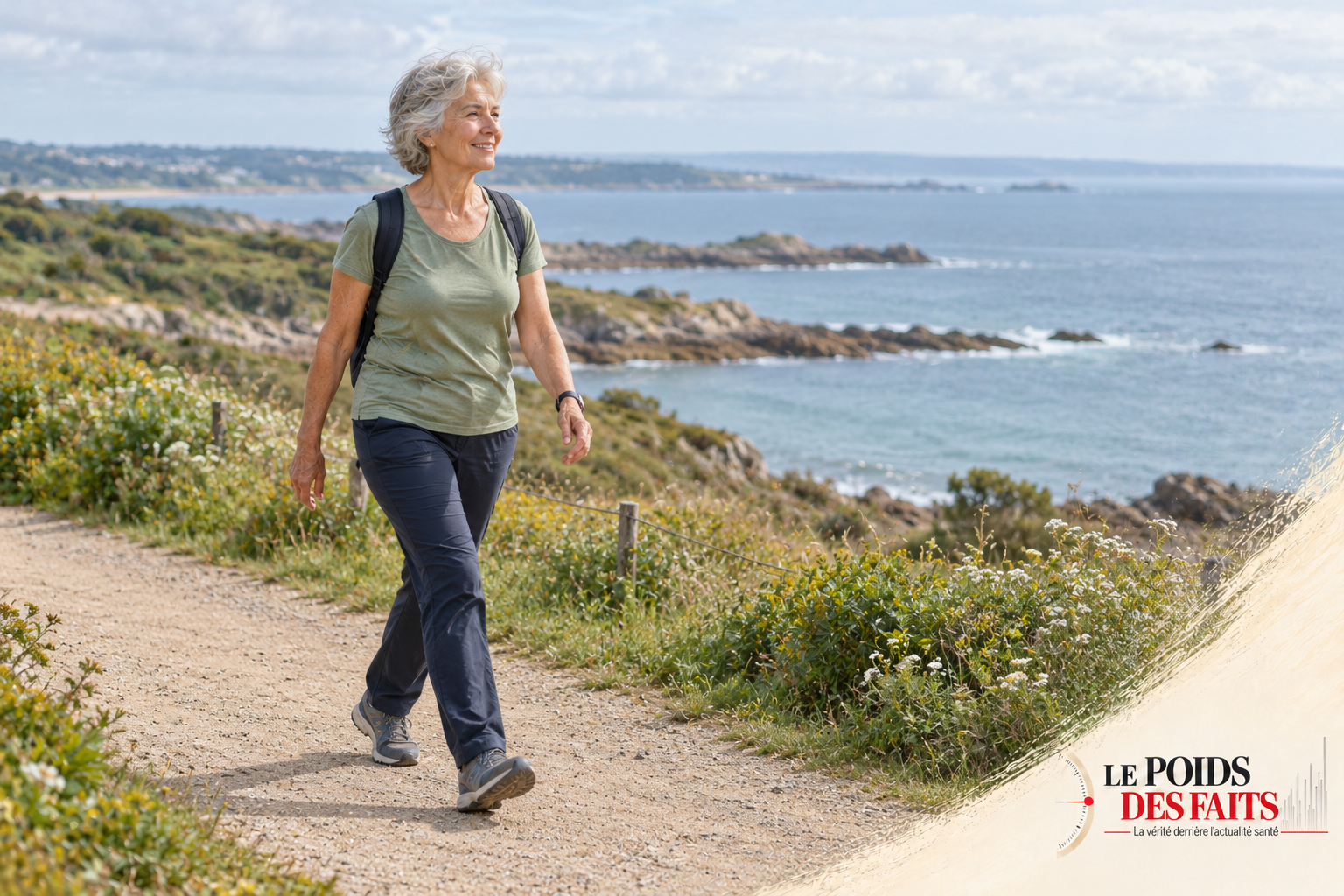
A friend suggests a walk. Your partner talks about a trip. Spring comes back and you’re already thinking about your garden.
These are simple moments. Yet they matter enormously.
And to live them, we ask a lot of our bodies, often without even realizing it.
Our body carries us. It lets us get up, walk, carry things, hug and take part.
Taking care of your strength also means taking care of the moments you still want to live.
THE NUMBERS
41 studies to better understand what we can still build
A meta-analysis published online on August 8, 2026, in Ageing Research Reviews, brought together 41 randomized controlled trials and 3,141 participants aged 60 and older.
The interventions lasted at least eight weeks.
The researchers looked at the strength produced relative to the amount of muscle. Their main finding: resistance training improved this measure, even though results varied widely from one study to another.
These findings invite us to look at the potential for progress after 60, while respecting the differences between people.
THE SCIENCE
Muscles that help us live
This research distinguishes the amount of muscle from the strength it produces. It shows a benefit of resistance training on that ratio; on its own, it doesn’t show that every participant became more independent.
Results from the other interventions were less conclusive for this specific measure. That doesn’t mean cardio or nutrition are useless.
As a trainer, I like to remind people of one thing: our muscles, tendons, ligaments and joints all work together in every movement we make.
Think about everything your body does when you get up from a chair or climb a flight of stairs. These movements seem ordinary, but they let us take part in our own lives.
The human body is made to move. Movement deserves a place in our daily lives.
Two strength sessions don’t mean only two days of movement
The World Health Organization recommends strengthening the major muscle groups at least two days a week, in addition to endurance activities. After 65, it also recommends varied activities that challenge balance and strength.
This guideline is about muscle work. It doesn’t mean you should stay inactive the rest of the time.
The WHO advises starting with small amounts of activity, then building up according to your abilities.
Walking, dancing, gardening, biking, working out: everyone can look for the ways to move that suit them. The choice of activities, their intensity and recovery should take your condition into account.
THE HUMAN SIDE
When a staircase makes us hesitate in front of a beautiful moment
Yesterday, on vacation, my legs were very tired. Here, we walk about 22,000 steps a day.
We had picked a restaurant on the second floor. A spectacular place, with a view of the sea.
Then, on the stairs, I noticed that a short section had no handrail.
I hesitated.
And yet I’m in shape. I move regularly. But in that moment, with the fatigue in my legs, the fear of falling stopped me.
That hesitation got me thinking.
How many beautiful moments can we let slip by when we no longer feel confident enough in our bodies?
What we don’t see behind giving something up
I thought about someone who doesn’t move much, who lacks strength or who already finds getting around difficult. Someone for whom extra weight, pain or a health problem adds to the effort.
Facing that same staircase, would they have chosen to go up?
Would they have been able to enjoy that lunch and take in the sea from that beautiful spot?
Or would they have preferred to stay downstairs, without necessarily explaining why?
You can turn down an invitation by saying, “I don’t really feel like it.”
When deep down, you’d love to go.
But you’re afraid of falling. Of not keeping up. Of needing help. Of ending up in an uncomfortable situation in front of others.
Sometimes, behind a “no,” there’s an “I’d love to so much, but I don’t feel able to.”
When disappointments pile up
Losing part of your independence affects much more than how you move.
It can affect your confidence, your spontaneity and the pleasure of saying yes to an invitation without first sizing up every obstacle.
Will there be stairs? How long will we have to walk? Will I be able to rest? Am I going to slow everyone down?
After hesitating again and again, living through disappointments or feeling overwhelmed, you can start pulling back from certain activities. Then stop considering them altogether.
And that withdrawal can hurt.
Because you’re not just giving up a staircase or a walk. Sometimes you’re giving up a discovery, a shared meal, a memory you would have loved to create.
Our world can get smaller while our desire to live is still very much there.
Caring for your body to keep your options open
That’s why I want to talk about strength, but also about mobility, balance and cardiovascular fitness.
I want us to think about what these abilities mean in our lives: moving around with more ease, taking part, exploring and still being able to say yes to what draws us.
It starts with where we are today. With movements adapted to us, realistic progress and support when it’s needed.
Of course, being in shape doesn’t remove every risk. My hesitation in front of a section with no handrail was understandable. Taking care of yourself also means recognizing a danger and asking for support.
The environment matters too. Handrails, accessible entrances and places to rest allow more people to take part.
Building our abilities and making places accessible both help preserve the freedom we hold so dear.
For the moments we still want to live
That staircase reminded me why I keep moving.
For my health, yes. But also for those moments you can’t plan: a restaurant discovered while traveling, a breathtaking view, a walk that goes on longer because you’re enjoying each other’s company.
We can’t avoid every limitation or every disappointment. But we can look for ways to maintain the abilities that support the pleasures we care about.
So I’ll ask you this question:
What would you love to keep saying yes to?
Your answer deserves a place in the way you take care of yourself.
Jacques Aubin
Author, communicator and human transformation coach
The Weight of Facts · The truth behind the health headlines
About Jacques Aubin
Author of the book For Once, Go All the Way!, speaker and coach, Jacques Aubin supports people who want to take back control of their health, their habits and their lives.
Through his talks, seminars, training programs and individual or group coaching programs, he shares an approach grounded in experience, awareness, responsibility and respect for the human being.
Scientific sources
Ohta and colleagues. Effects of exercise and nutritional interventions on muscle-specific strength in older adults: A systematic review and meta-analysis. Ageing Research Reviews. Published online August 8, 2026. Read the study.
World Health Organization. WHO Guidelines on Physical Activity and Sedentary Behaviour. Read the guidelines.